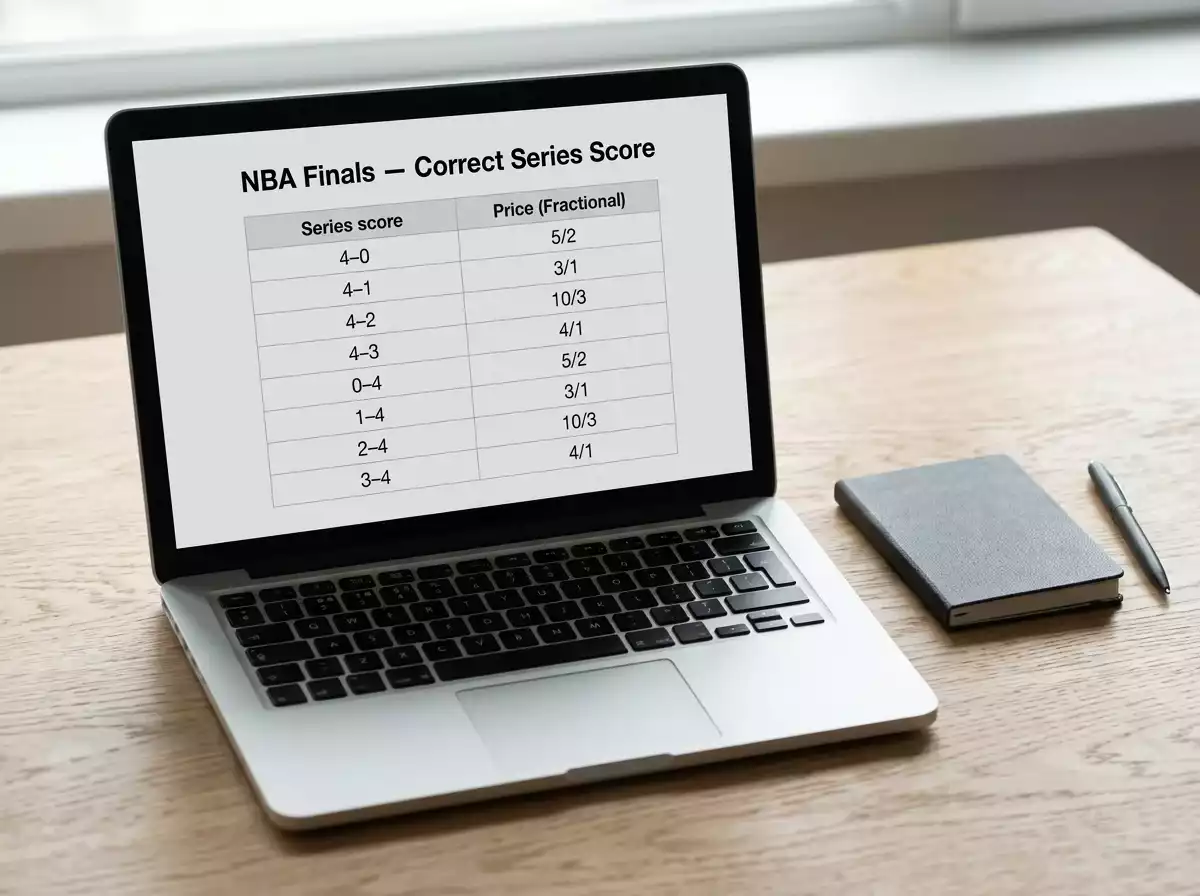
UK Offshore NBA Betting Risks vs Regulated Sportsbooks
 Available in US
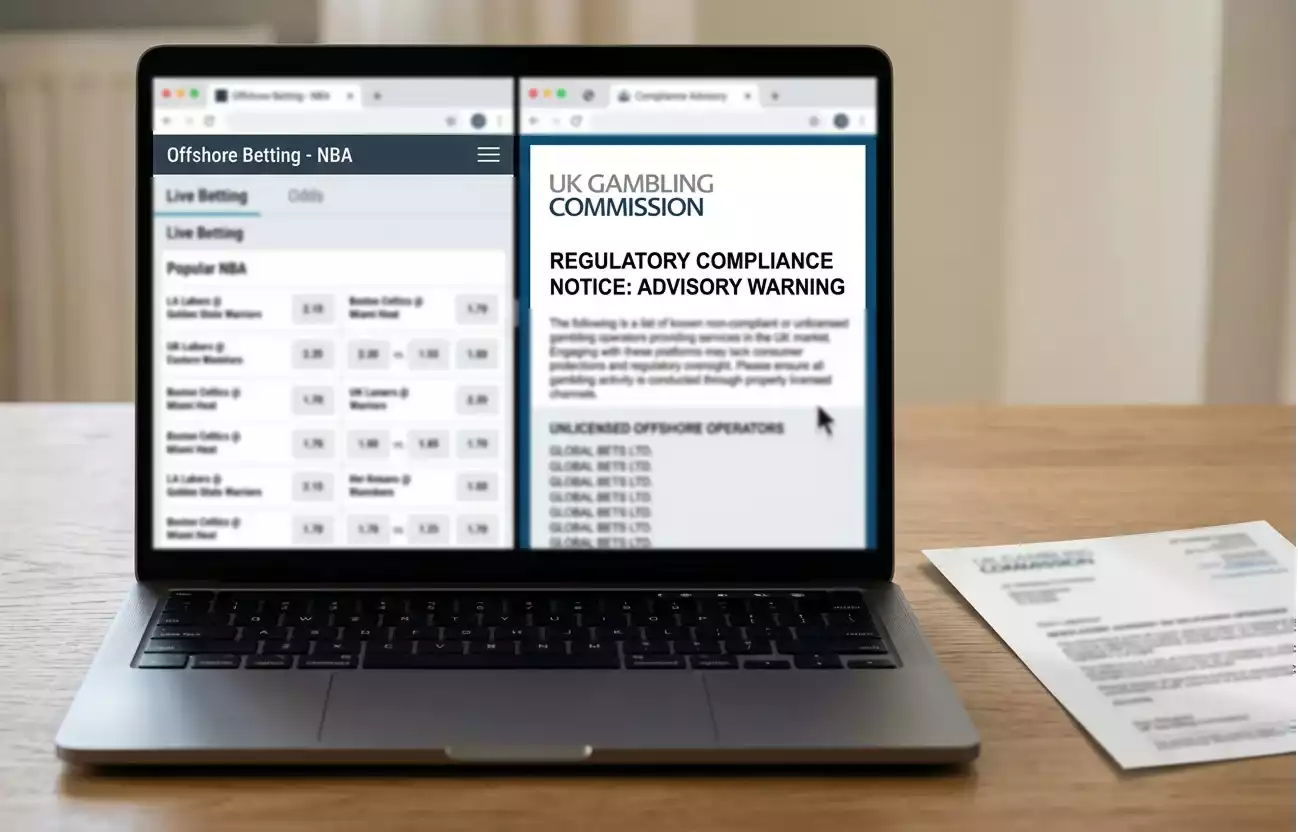
Identifying Red Flags on Unregulated Betting Sites
A reader emailed me in January with screenshots from his Instagram feed. Ten consecutive ads. Eight were for what looked like polished US sportsbooks – DraftKings-style branding, FanDuel-style fonts, even copy that read like American TV ad scripts. None of the eight was UKGC-licensed. He’s a 24-year-old UK basketball fan; his account was being micro-targeted at exactly the audience the offshore market wants most. He asked me how he was supposed to know which were legitimate. The answer involves more steps than it should.
The black market for UK sports betting hit £16.6 billion in 2025 according to H2 Gambling Capital data for the Betting and Gaming Council, more than three times the £5 billion level of 2019. The regulated market’s share has dropped from 97% in 2019 to 92% in 2025. Those numbers are at the heart of why the UKGC has been pushing for tighter controls – not because the regulated market is harmful, but because the gap to the unregulated market is growing fast.
NBA fans sit at the centre of the offshore targeting strategy. Basketball is structurally American, the offshore books are mostly American-flavoured, and the visual language of US sportsbook ads translates directly to UK NBA-curious users in a way that football ads don’t. This article walks through the market size, how offshore sites target UK NBA fans, the red flags that should stop you before depositing, the consumer-protection gap, and what UKGC is doing about it.
While regulated sites require UKGC affordability checks, these measures are designed to protect players, unlike offshore alternatives.
The Size of the Problem
£16.6 billion in 2025 is a number that needs context. The total UK gambling gross gambling yield was £16.8 billion in the financial year to March 2025 – a 7.3% year-on-year rise. So the black market in volume terms is roughly comparable to the entire regulated market’s full-year revenue. The black market doesn’t capture revenue in the same way (it’s gross stakes rather than GGY), but the rough scale is staggering.
Andrew Rhodes, the UK Gambling Commission’s Chief Executive, spoke at BGC AGM 2025: “Recent data published shows that total gross gambling yield (GGY) is at its highest ever level at £15.6 billion. Participation in gambling has remained stable at 48%, just under half of the adult population in Great Britain.” The 92% regulated-market share he was implicitly defending depends on the black market not capturing more of the population. The 8% gap is the population most exposed to the offshore pool.
For NBA specifically, the share that goes offshore is likely higher than for football. Football is so deeply embedded in UK regulated betting (every Premier League weekend, every UK shop window) that the offshore alternative has to work harder to attract attention. NBA is the opposite – it’s a US-flavoured product where the offshore alternative looks more like the cultural baseline than the regulated UK version does.
The 24% growth in the UK NBA fan base since 2022 (per UK government data) is happening alongside this offshore expansion. Every new UK NBA fan is a fresh target for offshore marketing. Some find UKGC books first; some find offshore sites first; the path is essentially random and depends on which Instagram ad lands first.
How Offshore Sites Target UK NBA Fans
The targeting playbook is consistent. Step one: social media advertising on Instagram, TikTok, X (Twitter), and Reddit, with creative that mimics the look of US-regulated sportsbooks. Bonus offers featured prominently – “Bet $20, get $200 back” – in dollar terms, because the offshore audience overlaps US and UK, and the dollar framing makes the offer look more legitimate to UK eyes that associate dollar amounts with proper sportsbooks.
Step two: influencer partnerships. UK basketball content creators on YouTube, Twitch and TikTok are approached with affiliate deals from offshore books. The disclosure is often weak or absent, and the creator’s audience absorbs the recommendation as endorsement rather than advertisement. UK NBA Twitter has a noticeable layer of accounts that promote offshore books while pretending to share “value plays” – the value being the affiliate revenue, not the bet.
Step three: search engine optimisation. Search “NBA Finals odds UK” or “best NBA betting site UK” and you’ll find offshore sites in the top organic results alongside legitimate ones. The offshore SEO operation is professional – proper UK-targeted content, “best of” lists that include unregulated operators, comparison tables that gloss over the licensing question entirely.
Step four: same-game parlay marketing. SGPs are the highest-margin product on any sportsbook, and offshore books promote them aggressively because the margin lets them pay generous welcome bonuses while still profiting. NBA Finals SGPs are advertised as “your shot at a 50x payout” – language that’s literally accurate for the maths but elides the 15-20% combined overround.
Grainne Hurst, CEO of the Betting and Gaming Council, captured the underlying dynamic in May 2026: “What we are seeing is a harmful black market scaling up at pace. Illegal operators are becoming more sophisticated, more visible and more aggressive in how they reach UK customers.” The sophistication is exactly what makes spotting the difference hard.
Red Flags to Spot
The cleanest signal is the regulator’s footer on the operator’s site. Every UKGC-licensed operator displays the licence number in the footer – typically alongside “Regulated by the UK Gambling Commission” or a similar phrase. The licence number is verifiable on the UKGC’s public register. If the footer says “Regulated by Curaçao eGaming” or “Licensed in Costa Rica” or has no licensing statement at all, the operator is not UKGC-licensed. UK customers using it have no UK regulatory protection.
The second signal is currency. UKGC-licensed operators always offer GBP as a primary currency. If the deposit options are USD-only, or if GBP requires a conversion fee, that’s a flag. UK customers betting in USD on a foreign-licensed site are doubly disadvantaged – they pay the conversion spread and have no recourse if the site refuses withdrawal.
The third signal is the verification process. UKGC operators run know-your-customer checks at registration: identity verification, address verification, source-of-funds checks at deposit thresholds. Offshore sites often skip these or make them optional. If you can deposit £200 within 60 seconds of creating an account with only an email address and a debit card, the operator is not running UK-style controls.
The fourth signal is the bonus structure. UK welcome bonuses are typically modest and come with proportionate wagering requirements (3-5x for sports betting). Offshore welcome bonuses are extravagant – “100% match up to $500” with 20-40x wagering requirements that mean the bonus is effectively unrealisable. The disproportion is the tell.
The fifth signal is the affordability check absence. As of February 2025, UKGC operators run light-touch financial vulnerability checks at the £150 net 30-day threshold. If you’ve deposited £300 to a sportsbook in a month and the operator hasn’t asked you for a single document, the operator probably isn’t UKGC-licensed.
The Consumer Protection Gap
When a UK customer disputes a withdrawal with a UKGC-licensed operator, the path is: complain to the operator first, then escalate to an Alternative Dispute Resolution (ADR) provider, then to the UKGC if necessary. The ADR can compel the operator to pay if the dispute is upheld. The licensing requirement gives the customer a backstop.
When a UK customer disputes a withdrawal with an offshore operator, the path is: complain to the operator, and if they refuse, complain again. There is no UK regulator with jurisdiction. The Curaçao or Costa Rica regulator that nominally licences the operator is typically uninterested and unresponsive to UK consumer complaints. The bettor has no enforceable recourse.
The same gap applies to fairness disputes (was a bet voided incorrectly?), self-exclusion (the GAMSTOP database doesn’t cover offshore), affordability (no checks), and source-of-funds protection (the offshore site has no obligation to refuse a customer in apparent financial distress). The gap is the entire UK consumer-protection framework.
For NBA bettors during the Finals, the practical implication is sharpest around large wins. A £200 stake at 20/1 on Cleveland Cavaliers (who moved from +5000 to +2000 after their 125-94 Game 7 win over Detroit) returns £4,000 if they win the title. If that £4,000 is held by an offshore site that decides the bet was placed in violation of some obscure term in the small print, the bettor has effectively no path to recovery. UKGC operators face regulatory consequences if they pull that move; offshore ones don’t.
Always ensure you are wagering in a safe environment by choosing operators recommended by the top UK NBA betting guide.
What UKGC Is Doing About It
The UKGC has been increasing pressure on the offshore market through three main routes. Route one: domain-level enforcement. The Commission works with internet service providers and search engines to flag and block offshore operators that target UK customers. The mechanism is imperfect – new domains spin up faster than old ones can be blocked – but it raises friction.
Route two: payment-system pressure. UK banks and payment processors are required to monitor and block transactions to known offshore gambling operators. The Monzo/Starling/Lloyds gambling-block feature is the consumer-side version of this. The wholesale version operates at the bank’s transaction-monitoring layer.
Route three: enforcement of advertising rules. Influencers and social media platforms that promote unlicensed operators to UK audiences face regulatory action under the Gambling Act. Enforcement has been patchy but is increasing, with several high-profile cases of UK-based influencers facing fines for promoting offshore basketball books in 2025-26.
The tax pressure on the legal market complicates this. UK Remote Gaming Duty rises from 21% to 40% from April 2026, with the new 25% Online Sports Betting Duty arriving in April 2027 to replace the current 15% General Betting Duty. As licensed operators absorb the duty hike, the price gap between UK books and offshore books widens, and the structural incentive for UK bettors to drift offshore strengthens. Hurst put the policy tension bluntly: “The choice for policymakers is clear. If the regulated sector becomes harder to use or less competitive, customers will not stop betting, they will simply go elsewhere.” UKGC’s enforcement effort is fighting that current. Whether it can hold the line through 2026-27 is the open question. The complementary view from the self-exclusion side is in GAMSTOP self-exclusion for NBA bettors.
How do I check if an NBA sportsbook is UKGC-licensed?
Look for the operator’s UKGC licence number in the website footer, typically alongside a phrase like ‘Regulated by the UK Gambling Commission’. Cross-check the number against the UKGC public register, which is freely searchable. If the footer mentions Curaçao, Costa Rica, or no licensing body at all, the operator is not UKGC-licensed and you have no UK regulatory protection if anything goes wrong.
Why do offshore books offer better-looking NBA odds than UK operators?
Offshore books face lower tax burdens than UKGC-licensed operators. The UK regulated market has a 15% General Betting Duty and a 21% Remote Gaming Duty (rising to 40% in April 2026), plus regulatory compliance costs. Offshore operators avoid most of these, which lets them advertise longer prices and bigger bonuses. The price advantage comes with the loss of UK consumer protection, regulatory recourse and financial-vulnerability protections.
Prepared by the nba Final Bets editorial staff.