Oddschecker vs UK Sportsbooks: Finding the Best NBA Lines
 Available in US
Comparing Aggregator Pricing to Direct Sportsbook Odds
I lost a 4/1 ticket once because I trusted Oddschecker too much. The grid showed 4/1 best price on a Finals outright; the operator behind that 4/1 was a smaller book I didn’t have an account with. I clicked through, the page redirected to a deposit screen, by the time I’d loaded my account the price had moved to 7/2. Lesson learned: the aggregator shows you what’s available, not what’s executable. There’s a difference.
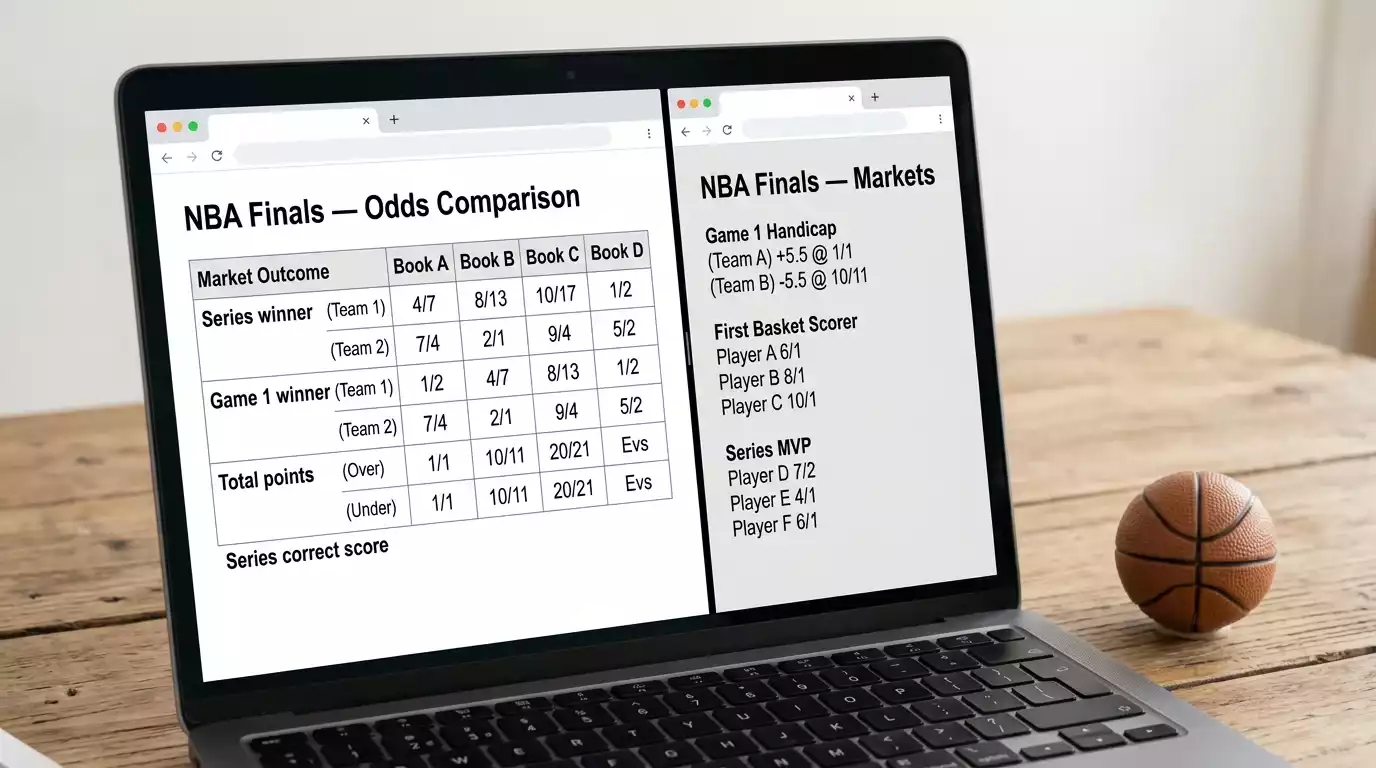
Oddschecker is still the centre of price-discovery for UK NBA bettors. Nothing else compares the major UK operators in one grid as quickly. But the aggregator has gaps – coverage gaps, latency gaps, price-boost gaps – and the bettors who understand those gaps line-shop more efficiently than those who treat Oddschecker as gospel.
This article walks through what Oddschecker actually covers, where price boosts and bookmaker-direct promotions sit outside the aggregator’s view, what the trade-offs are between using the aggregator and going direct to a book, how Betfair Exchange fits into the routine, and the workflow I run on a typical Finals night.
What Oddschecker Actually Covers
Oddschecker compares the prices on around 30 UK and international sportsbooks across most sports markets. For NBA Finals, the coverage includes the major UK operators – bet365, Paddy Power, William Hill, Sky Bet, Coral, Ladbrokes, Unibet, BetVictor, 888sport, Smarkets, Boylesports – plus a few international books that take UK customers and a handful of smaller UK operators.
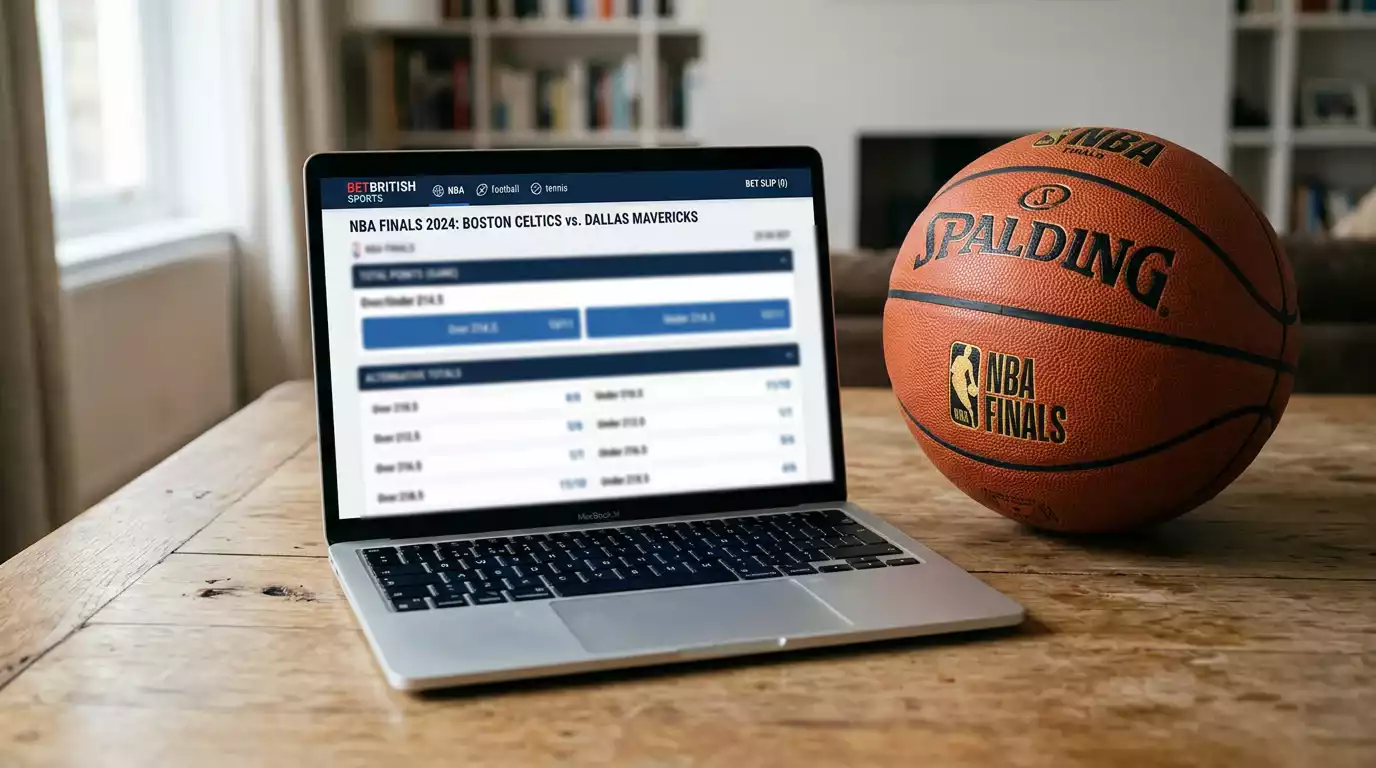
What Oddschecker shows by default is the headline price on the main market (outright, moneyline, spread, total). What it doesn’t show is the full prop board for every operator, the price boosts that books email or push only to their own customers, the in-app exclusive offers, and the boost-on-bet365 type products that require you to be logged into the operator’s app to see.
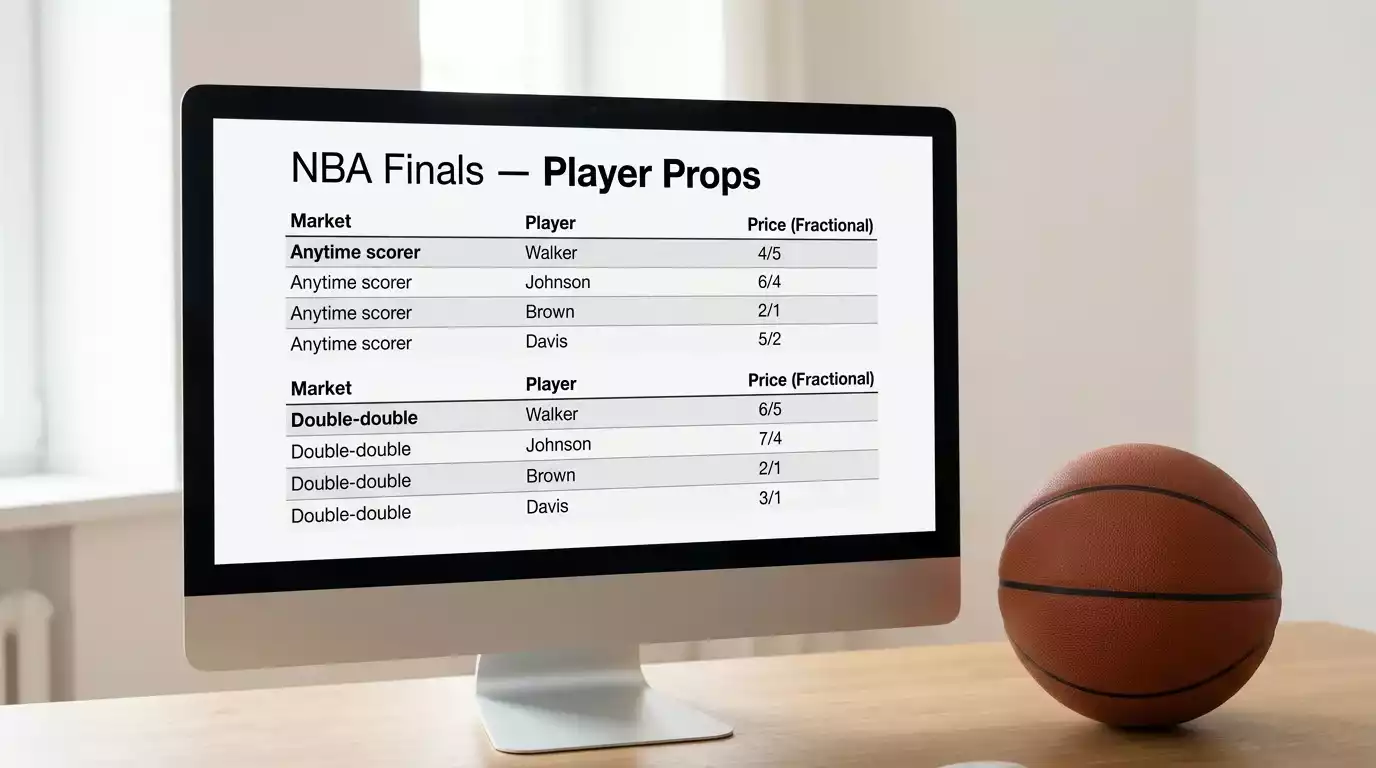
The result: Oddschecker is excellent for the high-volume, headline NBA markets. For the more niche markets – series scoring leader on the 12th-best player on the Finals roster, an obscure double-double prop on a backup big – the aggregator often has incomplete coverage or hasn’t updated to the latest book price. For prop bettors who play that depth of the board, going direct to operators is necessary, not optional.
One more gap worth flagging: exchange prices. Oddschecker shows Betfair Exchange back prices alongside the bookmaker grid, but the way it shows them can mislead. The exchange back price is the price the market is offering you to back at – but exchange liquidity for NBA is much thinner than for football, so the price you see might be available only for a £20 stake. If you want to back £200 at that price, you’ll move the market and pay a worse average. Going direct to Betfair Exchange and reading the actual order book is the only way to know your real executable price.
Price Boosts and Specials
Price boosts are the marketing weapon UK books use to compete on visible-but-narrow promotions. The product manager at the operator picks a popular NBA market – typically a player prop or a same-game parlay – and boosts the price by 10-25% relative to the standard pricing. The boost lasts until the operator’s stake limit is hit, usually around £25 maximum stake per customer.
Most boosts don’t appear on Oddschecker because the aggregator’s data feed picks up the standard price grid, not the time-limited boost overlay. The boost lives in the operator’s own app and email, hidden from the comparison view. UK bettors who don’t check the operator app directly miss them entirely.
Are they worth chasing? Sometimes. The boost has to be (a) on a market you’d have bet anyway, (b) priced longer than the next-best non-boosted price, (c) within the stake limit you can actually use. If all three are true, the boost is essentially free expected value. If any one of them isn’t, the boost is a behavioural hook designed to get you into a market you didn’t want.
The trap I’ve seen most often: a boost on a specific player prop that’s longer than the standard price but still shorter than your own model’s fair price. You feel like you’re getting value because the boost beats the alternative, when in fact you’d still be betting at negative expected value against your own estimate. Boosts don’t override your model.
Direct vs Aggregator Trade-Offs
Going direct to a sportsbook means visiting the operator’s site or app, navigating their NBA section, and looking at the live prices in their interface. The advantages: full prop coverage, current boosts and specials, account-specific promotions, the bet builder interface, the operator’s own in-play product.
The disadvantages: it’s slow. Checking three operators directly takes three times longer than checking Oddschecker once. For high-volume markets where the prices are tight and the gaps between operators are small, the time cost of going direct outweighs the marginal value gained. Use the aggregator for the standard board, use direct for the niche markets and the boosts.
The UK regulated market generated £7.8 billion in remote sector GGY for the year to March 2025, with online accounting for 46% of the industry. Inside that £7.8 billion sit the operators Oddschecker covers, plus the smaller specialist books it doesn’t always pick up. The aggregator’s coverage is dense in the high-volume operators where most of the money flows, but it thins out at the edges, which is precisely where some of the more interesting NBA Finals prices live.
UK Remote Gaming Duty rises from 21% to 40% from April 2026, with the new 25% Online Sports Betting Duty arriving in April 2027 to replace the current 15% General Betting Duty. As operators absorb the tax pressure, expect promotional layers – price boosts, free-bet specials, account-targeted offers – to become more important relative to standard pricing. That shifts the line-shopping balance further toward going direct, because the aggregator can’t see those promo layers.
Exchange Options
Betfair Exchange and Smarkets are the two UK-facing exchanges that matter for NBA Finals. Both run on a peer-to-peer model: every back has a matching lay, and the exchange takes commission on net winnings rather than baking margin into the price.
For Finals outrights and series prices, exchange liquidity is meaningful but thinner than for football. Betfair’s NBA Finals outright market typically has £50,000 to £200,000 matched over the course of the playoffs – enough for individual bets up to £500-£1,000 without significant slippage, but a fraction of what you’d see on a Premier League outright. Smarkets has even less depth and is best used as a price-discovery tool rather than an execution venue.
Commission rates matter. Betfair’s standard commission is around 5%; Smarkets is around 2%; specialist exchange Matchbook is around 2% for sports markets. On a £1,000 winning stake at 4/1, the commission difference is £30 of profit kept or given up. For UK bettors running a meaningful annual volume on NBA, the exchange choice is a P&L decision, not a UX one.
The big advantage of exchanges: you can lay (bet against an outcome). For NBA Finals futures held since October, the exchange is the only way to actually close out the position before the series ends. Backing a team to win the title at the start of the season and laying that same team off on Betfair after they’ve made the Finals is how serious UK bettors lock in profit before the variance hits.
A Workflow Routine for Finals Night
Here’s the workflow I run on Finals game night. Step one – 22:00 BST: scan Oddschecker for the headline markets (moneyline, spread, total). Note the best price and second-best price. Step two – 22:15: check the operator apps for the books showing the best prices to see if there’s a boost or in-app promotion sitting on top. Step three – 22:30: check Betfair Exchange for the lay side of any position I’m considering, and for back prices on niche markets. Step four – 23:00: rest until the final injury report drops at 01:00 BST.
Step five – 01:00: review injury news, adjust positions if needed. Step six – 01:10: place pre-match stakes at the operators where the executable prices are best. Step seven – 01:25: pause. No more pre-match decisions after 01:25. Step eight – 01:30: tip-off. In-play activity, if any, by strict pre-set triggers only.
The whole routine takes about three hours of active attention spread across an evening. Most UK bettors I respect run something similar; the specifics vary but the structure is the same. Aggregator for breadth, direct for depth, exchange for the lay side and the niche prices. None of the three on its own is enough. For the specific lay-side mechanics on Betfair, the full playbook is in laying NBA Finals futures on Betfair Exchange.
Does Oddschecker include Betfair Exchange prices for NBA Finals?
Yes, Oddschecker shows Betfair Exchange back prices alongside the bookmaker grid. The catch is that the displayed exchange price might be available only at a small stake size because NBA exchange liquidity is much thinner than football. Going direct to the Betfair Exchange order book is the only way to know the real executable price for larger stakes.
Are price boosts on NBA Finals worth chasing at UK sportsbooks?
Sometimes. A boost is worth taking when it’s on a market you’d have bet anyway, when the boosted price is longer than the next-best non-boosted price elsewhere, and when the stake limit on the boost is large enough to make a meaningful difference. If any of those three conditions isn’t true, the boost is a behavioural hook rather than real value.
Written by the editors at nba Final Bets.