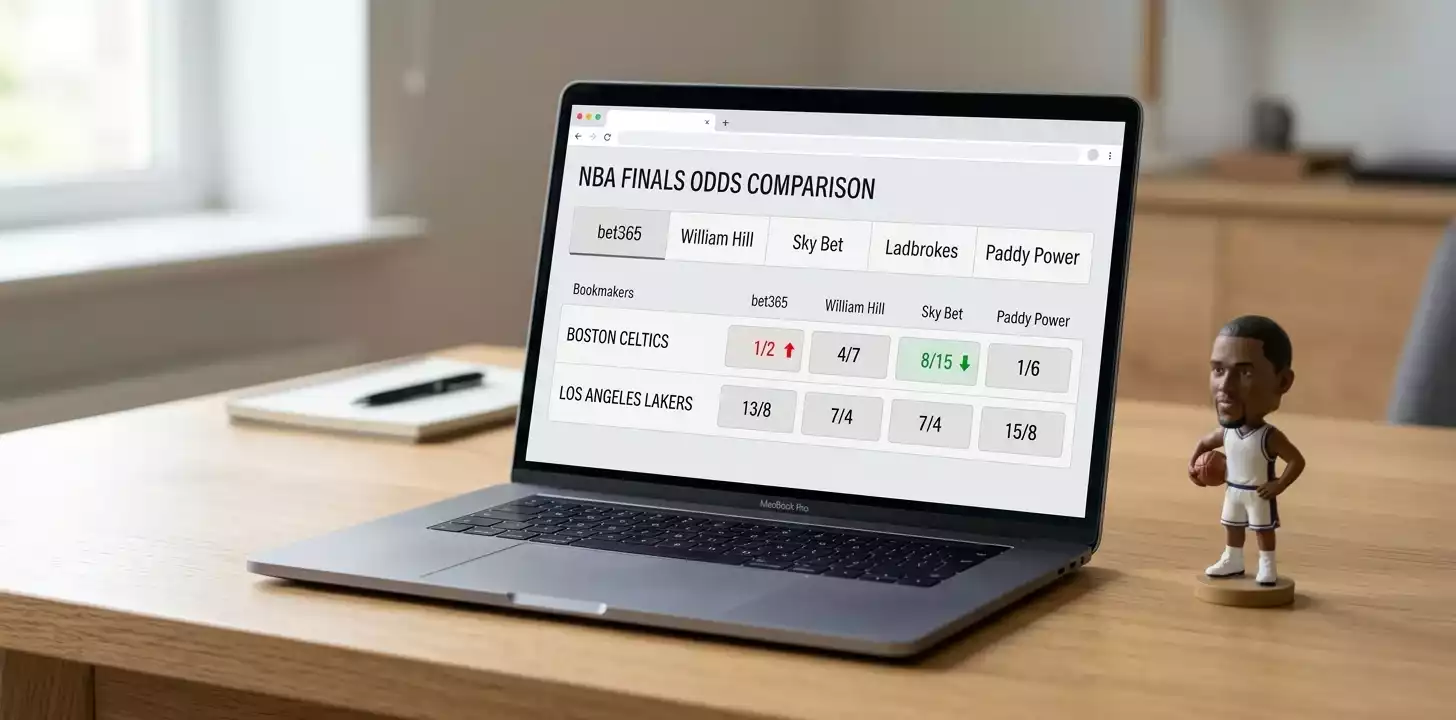
UK Betting Tax 2026: Impact on NBA Finals Odds and Margins
 Available in US

Effects of the 40% RGD on UK Sportsbook Margins
I read the Budget speech the way some people read sports recaps – looking for the line that changes the trading-desk maths for the next twelve months. The 2025 Budget delivered that line in two parts. From April 2026, Remote Gaming Duty rises from 21 per cent to 40 per cent. From April 2027, a new Online Sports Betting Duty of 25 per cent replaces the current 15 per cent General Betting Duty. Both changes apply to UK-licensed operators offering bets to UK customers, and both feed directly into the gross margin those operators need to extract from the prices they offer.
For UK bettors on the NBA Finals, the implications arrive in two waves. The April 2026 RGD hike primarily affects online casino and gaming products, but the policy signal it sends – and the operator behaviour it triggers – bleeds into sportsbook pricing across the board. The April 2027 OSBD hike directly affects every sports bet placed at a UK book, including every NBA Finals bet. UK NBA Finals odds in the 2026-27 season will be measurably tighter than the odds the same matchups would have priced at in the 2024-25 season, and the gap is the new tax line working its way through the system.
The duty changes in plain numbers
Three numbers matter. The first is the Remote Gaming Duty going from 21 per cent to 40 per cent from April 2026 – almost a doubling of the rate operators pay on online casino, slots, and bingo gross gaming yield. The second is the new Online Sports Betting Duty at 25 per cent from April 2027, replacing the current 15 per cent General Betting Duty on online sports markets – a 10-percentage-point increase. The third number is what these changes mean in aggregate: UK gambling duties on online gaming and sports betting are now among the highest in the world…
, in the words of the Betting and Gaming Council’s Grainne Hurst speaking about the impact of the Budget on the regulated market.
These are not small adjustments at the operator level. A UK book that previously paid 15p of duty on every £1 of gross sportsbook margin will pay 25p after April 2027. That increase has to come from somewhere – either the operator’s profit margin, the bettor’s expected value, or some combination. Historically, regulated markets that have absorbed duty increases of this scale have seen operators pass the bulk of the cost to bettors through wider overrounds and tighter promotional pricing.
The wider economic context matters. The UK black market has scaled to roughly £16.6 billion in 2025 – up from approximately £5 billion in 2019 – while the regulated sector’s share of total betting activity has fallen from around 97 per cent to 92 per cent over the same period. The duty hike will accelerate that channel-shift if operators pass too much of the cost to bettors, and policymakers are aware of the tension. Whether the duty increase ultimately produces the projected revenue depends on how operators reprice and how many bettors stay in the regulated market.
How UK trading desks will respond, in three predictable steps
I have watched UK trading desks navigate duty changes before, and the playbook is consistent across operators. Step one: identify which product lines have the most elastic demand. NBA Finals outright futures are inelastic for serious bettors but elastic for casual bettors who price-shop. Same-game parlays are highly inelastic – the bettors who use them tend not to comparison-shop across books – and are typically the first product to absorb wider margins after a duty hike.
Step two: reprice the headline overround on inelastic products while holding the elastic-product margins close to current levels. After April 2027, expect UK NBA Finals SGP overrounds to widen by 4 to 8 percentage points. The current SGP overround of roughly 125 to 135 per cent will likely move toward 130 to 142 per cent for the same product types. NBA Finals outright odds will widen less aggressively because they compete more directly with the Betfair Exchange – perhaps 2 to 4 percentage points of additional overround across the title market.
Step three: reduce promotional spending on products where the new margin cannot support previous customer acquisition cost. Price boosts on NBA Finals markets that previously paid out at a small loss to the book on a customer-acquisition basis become unviable when the book’s underlying margin has compressed. Expect fewer boosted NBA Finals markets after April 2026, with the surviving boosts having shorter stake caps and tighter eligibility criteria.
What this means for NBA Finals odds in concrete terms
Let me put numbers on the projection. The Thunder are currently priced at -175 to -180 across UK books for the 2026 title. Under the new tax regime, the same fair-value implied probability would price at -185 to -190 – roughly 5 cents tighter at the favourite end. The Spurs at +300 to +320 would price at +280 to +300 under the new regime – roughly 20 cents shorter at the second-favourite end. The Cavaliers at +2000 after their Game 7 move would have been more like +1700 in the new regime – significantly tighter at the longshot end.
The pattern is consistent. Tax increases compress the spread between fair odds and offered odds, but the compression is asymmetric. Favourites get marginally tighter – the book has less room to give on prices that are already short. Underdogs and longshots get meaningfully tighter – the book has more room to compress overround on prices where the absolute margin is largest. UK bettors who specialise in longshot futures will feel the duty hike most acutely, while bettors who focus on heavy favourites will see smaller percentage changes in their available value.
The in-play and same-game parlay markets will feel the biggest impact in percentage terms. SGP overrounds widening from 130 per cent to 140 per cent represents a 7.7 per cent increase in the book’s gross take per bet. That additional cost falls directly on bettors who use those products. For UK bettors building SGP tickets on Finals games in 2027 and beyond, the structural value will be measurably worse than the equivalent tickets in 2024 – even if the games and the players are identical.
Who loses most from the tax hike
Three groups of UK bettors will feel the duty hike more than others. The first is high-volume casual bettors who play across many small markets – small-stake same-game parlays, in-play prop bets, multi-leg accumulators. The compounding effect of wider overrounds across each leg adds up significantly over hundreds of bets per season. The second is longshot specialists who concentrate on plus-money underdog and futures bets, where overround compression hits hardest in absolute price terms.
The third group is the bettors who have been quietly arbitraging promotional pricing – taking boosts, comparing across books to extract value from inconsistent pricing, using free-bet offers to layer positive-expected-value bets on top of regular betting activity. The promotional landscape will narrow after April 2026 as operators reduce marketing spend in line with the new margin reality. The arbitrage that was profitable in 2024 may not survive 2027.
The least-affected group, paradoxically, is serious bettors who use the Betfair Exchange for their main exposure rather than fixed-odds books. The exchange runs on a commission model rather than a margin model, and Betfair’s commission rates have been stable for years. UK serious bettors who already shifted significant volume to the exchange will see the gap between exchange pricing and book pricing widen, which makes the exchange route relatively more attractive after April 2027 than it is today.
What a UK bettor can actually do about it
Three habits worth adopting before the duty changes land. First, audit your bet selection. If a meaningful portion of your annual NBA Finals betting volume goes through same-game parlays or low-stake in-play prop markets, those are the products that will absorb the largest margin increases. Reducing exposure to high-overround product types and shifting toward straight-line and exchange-pricing alternatives is the simplest single response.
Second, learn the Betfair Exchange before you need it. If you have not used the exchange and you place more than a handful of NBA Finals bets per season, the duty hike has just made the learning curve worth climbing. The exchange’s commission-based pricing model insulates you from operator-margin increases, and the price discovery on liquid markets is genuinely competitive even after commission. A UK bettor who shifts 50 per cent of their annual sportsbook volume to the exchange will offset most of the value loss from the OSBD hike.
Third, take the channel-shift risk seriously. The regulated UK market has visibly lost share to unlicensed operators over the past six years, and the duty hike will accelerate that drift if operators reprice aggressively. Stay in the regulated market. The protections offered by UKGC licensing – deposit limits, affordability checks, GAMSTOP integration, dispute resolution – are real, and the price you pay for them through marginally wider overrounds is worth the protection. The deeper analysis of what the unlicensed market actually looks like sits in our uk black market nba sports betting piece.
When does the 40% Remote Gaming Duty take effect?
The increase from 21 per cent to 40 per cent on Remote Gaming Duty takes effect from April 2026. The new Online Sports Betting Duty of 25 per cent, which replaces the current 15 per cent General Betting Duty, takes effect from April 2027. RGD applies primarily to online casino and gaming products; OSBD applies directly to online sports betting including NBA markets.
Will NBA price boosts disappear after the tax hike?
They will reduce in volume and tighten in terms. Price boosts that previously ran at small losses to UK books as customer acquisition spend become unviable when underlying margins compress. Expect fewer boosted NBA Finals markets after April 2026, with the surviving boosts having shorter stake caps and stricter eligibility. Genuine positive-expected-value boosts will become rarer.
Created by the ”nba Final Bets” editorial team.