NBA Finals Line Movement UK: Tracking Steam and Sharp Money
 Available in US
Table of Contents
- Interpreting Sharp NBA Money and Line Shifts
- What steam actually is, and why it is not the same as a line move
- The order in which UK books move, and why it matters
- Steam versus noise: how to tell the difference
- Should you chase steam, or read it?
- Tools and trackers UK bettors can use without specialist software
Interpreting Sharp NBA Money and Line Shifts
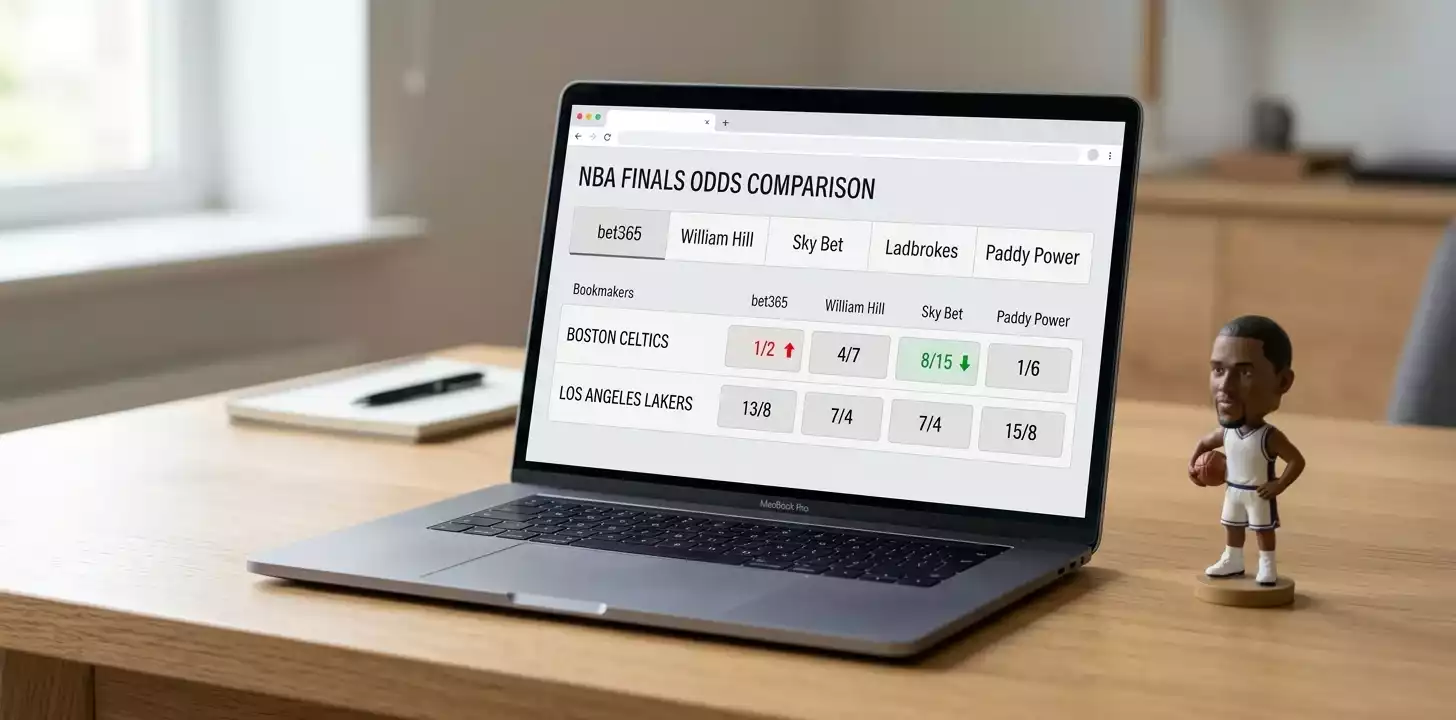
Some moves on the NBA Finals board look like a market gradually adjusting. Steam looks like a fire alarm. I watched the Oklahoma City Thunder shift from -160 to -180 to win the 2026 title across four major UK books in roughly 40 minutes one Tuesday morning, with no breaking news, no injury update, and no obvious public-money trigger. That is steam. It is the visible trace of sharp money hitting the market at scale, and it is the cleanest signal a UK bettor will ever get about where smart money thinks the price should be.
The current 2026 title market is a steam-friendly board. The Thunder are -175 to -180, the Spurs are +300 to +320, the Knicks are +550, and the Cavaliers moved from +5000 to +2000 after their Game 7 win over Detroit. Each of those line states represents a long sequence of sharp and casual money interactions, with steam moves embedded inside the bigger trajectory. Reading steam well does not turn a casual bettor into a sharp. It turns a casual bettor into someone who at least knows when the smart money has already moved – which is the first step to knowing whether you missed the value or caught it.
What steam actually is, and why it is not the same as a line move
Every line move is not a steam move. A single book lengthening its Spurs price from +320 to +350 in response to imbalanced positioning is a line move – the book is rebalancing its own exposure. Steam is something different. Steam is synchronised movement across multiple books in a narrow time window, almost always triggered by the same group of sharp accounts placing high-stakes bets at multiple operators within minutes of each other.
The mechanism is simple once you see it. A sharp betting syndicate calculates a fair price for the Thunder at -200. They identify which UK books are currently offering -160 or -170 – anything meaningfully above the fair price. They split their stake across those books, hitting each one with the maximum the book will accept on a single ticket. Within 15 to 30 minutes, every targeted book has updated its price to reflect the new information, and the line has steamed from -160 to -180 across the market.
For a UK bettor watching from the outside, the steam move looks like a chorus. Five different books, five different trading desks, all moving the same price in the same direction over the same short window. That synchronisation is the distinctive feature. If only one book moves, it is a private decision by that book’s trading team. If five books move in the same window, the signal is the smart money has placed bets that none of those books wanted at the prior price.
The order in which UK books move, and why it matters
Not every UK book reacts to steam on the same timeline, and the reaction order is worth knowing. The most steam-sensitive UK operators have automated price-monitoring systems that re-quote within seconds of a flagged ticket landing. Mid-tier books update within 5 to 15 minutes, typically after a human trader has reviewed the move. Casino-first books with smaller sportsbook operations sometimes lag by 30 minutes or longer, which creates a brief window where their prices look stale relative to the rest of the market.
That lag window is where chasing steam becomes plausible. If you see the Thunder steam from -160 to -180 across four UK books, and a fifth book is still showing -165 ten minutes later, the question is whether the fifth book is offering genuine residual value or whether they are about to update. Most of the time it is the latter – by the time you have placed the bet at -165, the book has moved to -180 and the value window has closed. The bettors who reliably profit from chasing steam are watching multiple books simultaneously with software that can place bets faster than a human can refresh a page.
For UK retail bettors without that infrastructure, the practical use of steam is not chasing it but reading it. When you see steam, the market is telling you that smart money believes the prior price was wrong. If you had already placed a bet at the prior price, the steam confirms you got value. If you were considering the prior price and missed it, the steam tells you to update your own view rather than placing a bet at the new price hoping the steam was wrong.
Steam versus noise: how to tell the difference
Not every synchronised move is steam in the sharp-money sense. Three things can produce simultaneous price movement across multiple UK books without informed money being the driver. The first is breaking news – an injury announcement, a coaching change, a rotation update. When real information drops, every book moves at roughly the same time because they are all responding to the same input.
The second is regulator or league announcements that affect the betting landscape. The October 2025 integrity case is the example most relevant to recent NBA history – multiple UK books pulled prop markets simultaneously not because of sharp money but because their compliance teams made the same call independently. That looked like steam but was actually a compliance response.
The third is automated balancing systems. Several UK books use the same third-party odds-feed provider, and when the upstream feed updates, every downstream book that consumes it moves in the same window. That is not sharp money – it is shared infrastructure. The way to distinguish is volume. Genuine steam comes with a visible spike in betting activity on the affected market. News-driven moves come with no volume signature, just price changes. If a UK price comparison tool shows synchronised movement without volume changes, it is probably feed-driven rather than sharp-driven.
Should you chase steam, or read it?
The honest answer for most UK bettors is read it, do not chase it. Steam chasing as a profitable strategy requires three things almost no retail bettor has: software fast enough to react in seconds, accounts at every UK book big enough to absorb meaningful stake sizes, and the analytical capacity to distinguish genuine sharp steam from compliance-driven or feed-driven noise. Without all three, chasing steam is a high-frequency loss machine.
Reading steam, by contrast, is something every UK bettor can do for free. The Cavaliers’ +5000 to +2000 move after their Game 7 win is a steam-trace you can read after the fact. It tells you what the sharp money decided that result meant. If you held a +5000 ticket from preseason, the steam is the market telling you your ticket has appreciated meaningfully and you have a hedge decision to make. If you were considering buying in at +5000 and missed it, the steam is the market telling you the value window has closed and the new price is not worth chasing.
The information-only approach also applies to futures and series markets. When the Thunder steam from -160 to -180, the bettor who already holds a -160 Thunder ticket has appreciated their position. The bettor who was hovering on the -160 entry has lost the window. The bettor who decides to buy in at -180 after the steam is essentially betting that the sharp money was wrong – which is a defensible bet only if your own analysis disagrees with the steam direction. Most of the time, when sharp money has moved a price by 20 cents, it is because the prior price was wrong.
The deeper foundation for thinking about prices this way is the work on closing line value – whether your bet beats the final market price – which is the topic that connects steam reading to long-term edge. The full structural treatment sits in our closing line value nba futures piece.
Tools and trackers UK bettors can use without specialist software
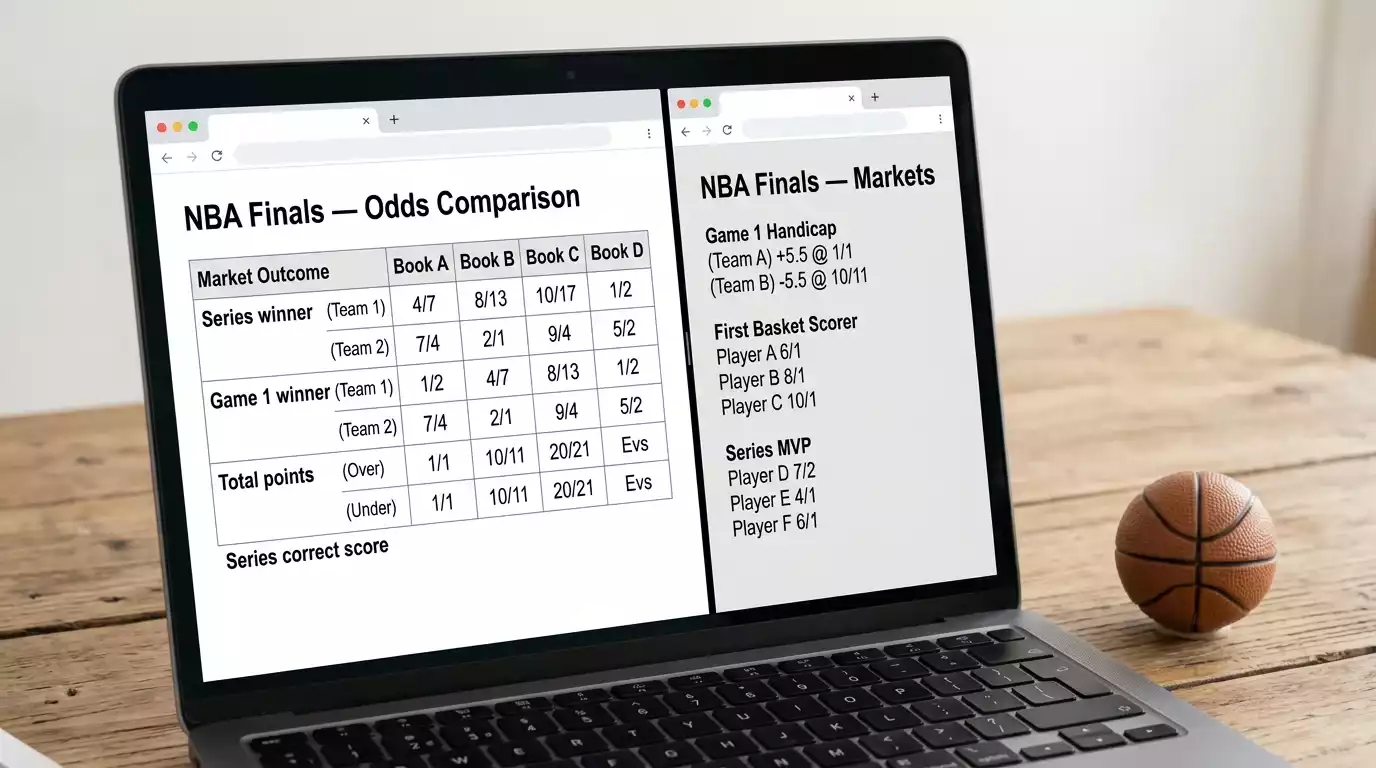
You do not need a paid line-movement service to track steam on UK NBA Finals markets. A simple workflow with three free tools gets most of the value. The first tool is a price comparison aggregator – these display side-by-side prices from major UK books in near-real time, and historical archives let you reconstruct the line trajectory across a market’s lifetime.
The second tool is a simple notes document where you log the prices and times of significant moves. After two or three Finals series of tracking, you build a mental library of what genuine steam looks like and how individual UK books behave. Some books are routinely first-movers, others are routinely laggards, and the pattern is consistent enough that you can rely on it season after season.
The third tool is the news feed. Steam without news is sharp money. Steam with news is informed response. Reading both feeds in parallel – the price feed and the news feed – is what lets you tell the two apart. The bettor who confuses news-driven moves with sharp-money moves will overweight the signal value of synchronised pricing and end up chasing moves that contained no genuine information edge.
Which UK book moves the NBA line first?
The most price-sensitive UK operators use automated monitoring systems that re-quote within seconds of a flagged ticket landing. Mid-tier books typically update within 5 to 15 minutes after a human trader review. Casino-first books with smaller sportsbook divisions can lag by 30 minutes or longer. The reaction order is consistent enough across seasons that retail bettors can identify which books to watch first when steam appears.
Is chasing steam profitable on Finals futures?
For most UK retail bettors, no. Chasing steam profitably requires software fast enough to react in seconds, large accounts at every major book, and the analytical capacity to distinguish sharp steam from compliance or feed-driven moves. Reading steam to update your own view is what produces value for retail bettors – chasing the price after it has moved typically delivers worse expected value than waiting for the next entry opportunity.
Written by the editors at nba Final Bets.